Dustbin Colour Codes
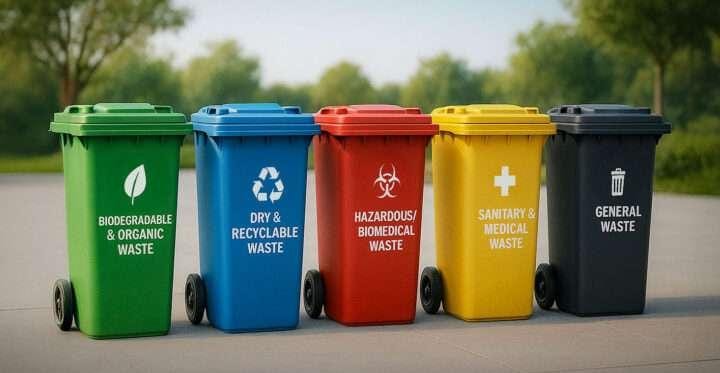
Many towns and cities use color-coded dustbins to manage trash. When people put different types of trash into different colored bins, it is called waste segregation (separating trash into groups). This simple system helps people know where to throw their trash at home, at school, or at work. By separating trash early, we can recycle more items and keep our streets clean.
Each bin color has a special job. Green bins are for organic waste, such as food scraps and plant waste. Blue bins are for dry recyclables like plastic bottles, glass, paper, and metal cans. Red and yellow bins are used for hazardous (dangerous) items, such as batteries or medical waste. Finally, black or grey bins hold general trash that cannot be recycled.
Using colored bins makes waste management much faster and cleaner. When wet food is kept separate from paper and plastic, the paper and plastic stay clean and ready for recycling. Also, waste workers do not need to sort mixed trash by hand. This saves a lot of time and protects workers from dangerous objects.
In short, color-coded bins help us take care of our planet. When everyone uses the correct bin, less trash goes to big dumps called landfills. It is an easy daily habit that helps reduce pollution and keeps our environment healthy for the future.
Answer the Questions
- What type of waste should you put in a green bin?
- What color bin is used for dry recyclables like paper and plastic?
- Why is it important to keep wet food separate from paper and plastic?
- How do colored bins help waste workers?


admin_hangtuah1


