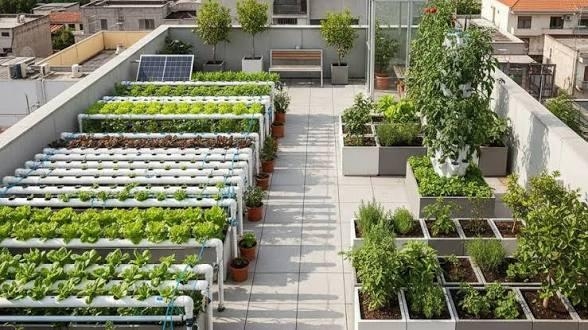
Limited land in urban areas is no longer an insurmountable barrier to agricultural cultivation, as urban farming offers a viable path toward food self-sufficiency. By utilizing spaces such as yards, balconies, terraces, rooftops, and idle public land, urban communities can address pressing challenges including food insecurity, rising staple food prices, and environmental degradation caused by a lack of green space.
According to Dr. Ir. Lis Noer Aini from Universitas Muhammadiyah Yogyakarta (UMY), limited land presents an opportunity to transform unused spaces into productive green areas. This practice is supported by legal frameworks such as Law No. 26 of 2007 on Spatial Planning, which mandates that 30 percent of city land be designated as Green Open Space (RTH). Modern cultivation techniques like hydroponics, vertical farming, and rooftop gardens make farming in densely populated areas highly efficient and adaptable.
Beyond environmental advantages, urban farming delivers significant economic benefits to households. Growing quick-harvest crops like mustard greens, chilies, and eggplants helps lower daily household consumption expenses amid high vegetable prices in cities. Furthermore, surplus yields can be commercialized to generate additional income, enhancing local economic resilience.
Despite obstacles such as restricted sunlight in dense residential zones, the success of urban farming ultimately relies on community awareness and active household participation. Educational institutions, including UMY’s Faculty of Agriculture, actively promote this movement through community outreach programs, fostering long-term food independence and sustainability starting from individual homes.
Credited to
https://www.umy.ac.id/en/urban-farming-solusi-kemandirian-pangan-di-tengah-kota/